An instrument, its consumable, and the software that drives it.
60Nd NeoMag® ships as three things you can put on a purchase order: the actuation unit, MagFlex™ substrates, and the platform that runs them.
Bought once, once per experiment, or included.
The instrument is permanent laboratory equipment. MagFlex™ substrates are the consumable: one per experiment, reordered as you run. The software comes with the instrument.
NeoMag® actuation unit
One-time purchase · permanent instrumentation
- NeoMag® actuation unit Single instrument
MagFlex™ substrates
Recurring · one substrate per experiment
- MagFlex™ 2D standard, ~3 kPa Box of 30
- MagFlex™ 2D built to order Individual substrate
- MagFlex™ 3D On request
NeoMag® Platform
Included with the instrument · updates ongoing
- NeoMag® Platform, basic subscription Included with the instrument
NeoMag® actuation unit
A magnetic field generator that deforms the substrate remotely, so nothing ever contacts the sample. Compact, portable and plug-and-play: it mounts on the upright and inverted microscopes a lab already owns, and runs inside a standard incubator.
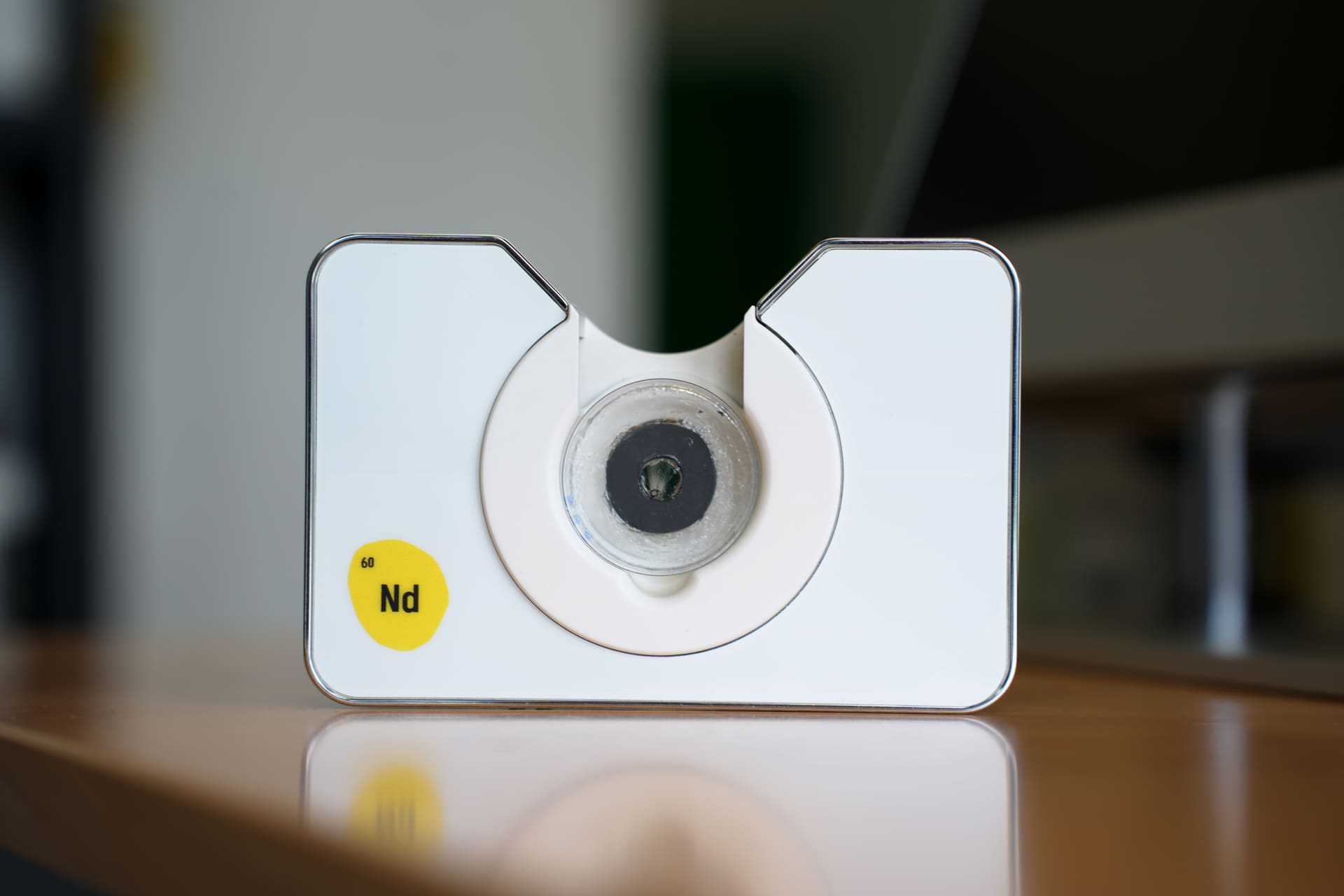
- NeoMag® actuation unit, calibrated at the factory
- Power supply with EU and US plug adapters
- Charging and connection cabling
- Remote installation and commissioning
- One-year warranty, extendable to three
- Basic NeoMag® Platform subscription
- Degrees of freedom
- 4
- Stiffness
- 0.04–30 kPa
- Deformation
- 0 – >15% (up to 30%)
- Frequency
- 0 – >1 Hz
- Plate compatibility
- P35 dishes and standard culture plates
- Time to run a test
- less than 5 minutes
MagFlex™ substrates
The proprietary consumable, and a holder rather than a culture surface. Each MagFlex™ is 3D-printed with an outer magneto-responsive elastomer (MRE) ring that converts the applied field into mechanical strain and transmits it inward. The magnetic particles stay in the ring, so the culture never contacts them. It comes in two variants, and they differ in what sits in the centre. One substrate per experiment.
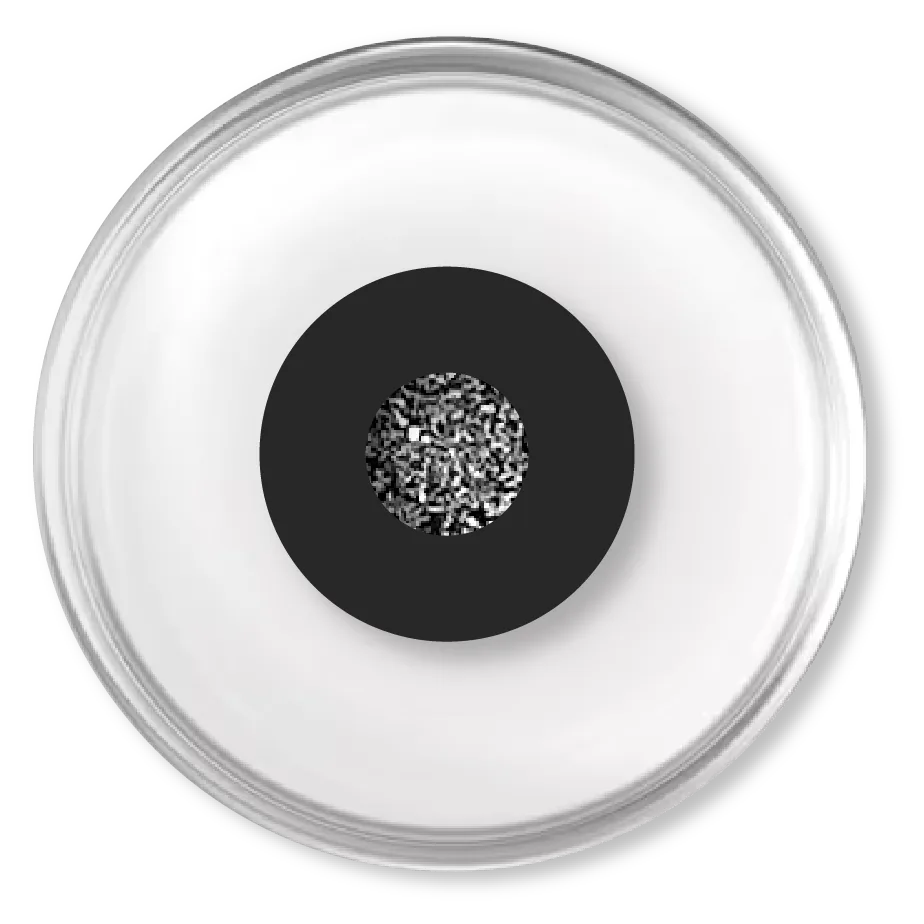
- MagFlex™ 2D: cells on a transparent PDMS window, ~3 kPa as standard
- MagFlex™ 3D: your ECM or hydrogel cast into the ring, which sets the stiffness
- Boxes of 30 standard 2D substrates, ready to use
- Non-standard stiffnesses built to order; MagFlex™ 3D on request
- Reorder from the NeoMag® Platform or by email
- 2D standard stiffness
- ~3 kPa
- 2D culture region
- 8 mm across
- 3D stiffness
- Set by your ECM or hydrogel
- Shelf life
- Indefinite
- Storage
- Room temperature, out of direct light
NeoMag® Platform
The web application the instrument is driven from. Configure devices, design protocols from scratch or from the test library with AI drafting them for review, simulate what the substrate will do, then run and monitor remotely. Nothing to install: it runs in a browser.
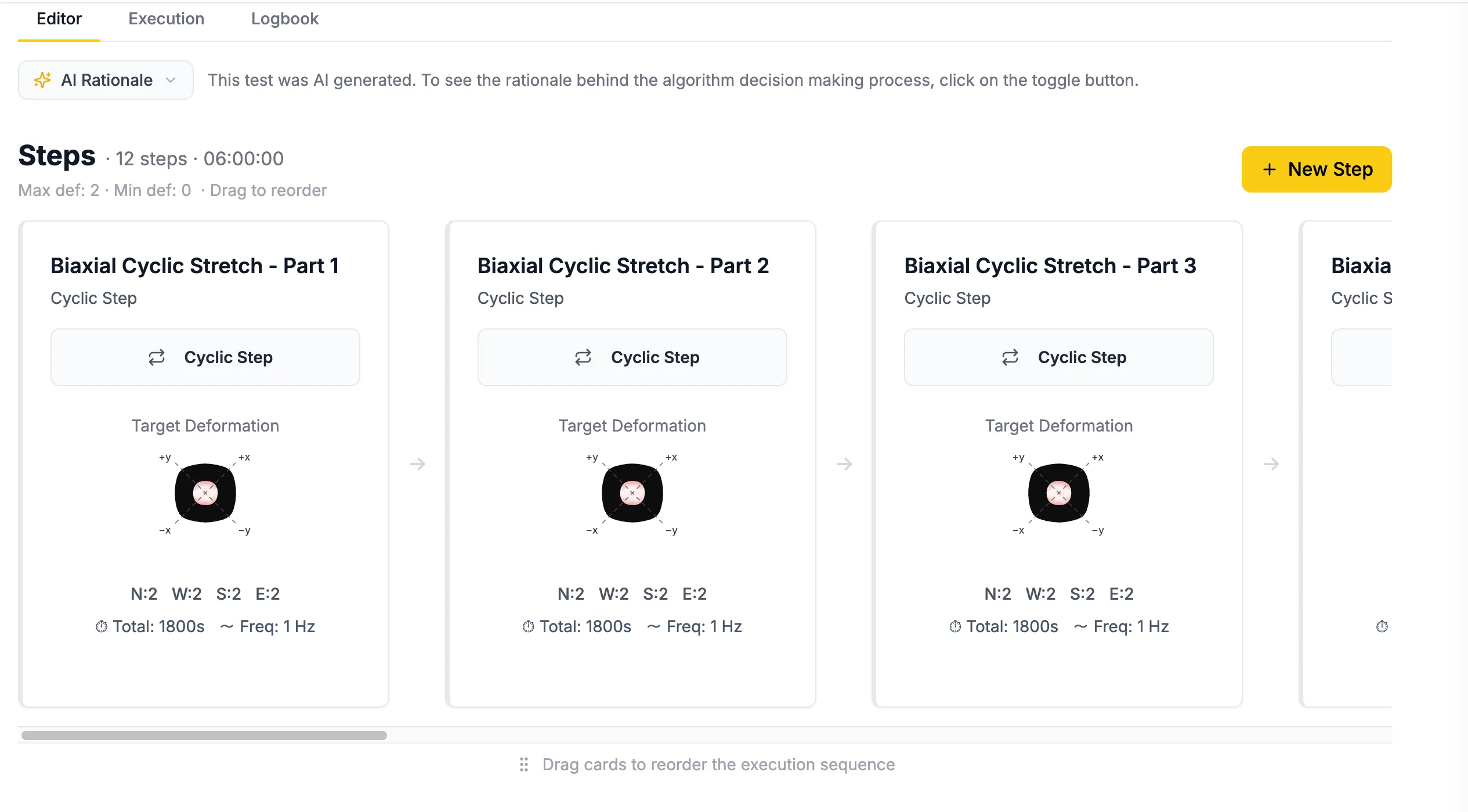
- Basic subscription included with the instrument
- Up to five users per device
- Protocol design, remote control and live monitoring
- Finite-element simulation of the protocol before it runs
- Growing library of pre-built tests
- Software updates included throughout
How to order.
Direct sales in Europe and the United States. Available on request elsewhere. Institutional purchase orders accepted.
- 01
Tell us the assay
Describe what you want to study and the mechanical regime it needs. We specify the MagFlex™ configuration for it, standard or built to order.
- 02
Receive a quote
A written quote covering the instrument, the substrates and any optional services. We accept institutional purchase orders.
- 03
Installation and training
The instrument ships from Spain within 3–4 weeks of order confirmation. Installation is remote and included; on-site training is available.
- 04
Reorder as you run
Substrates are reordered from the NeoMag® Platform or directly by email. Stock them without a deadline: shelf life is indefinite at room temperature.
Installation, training and cover.
Commissioning is remote and included with every instrument. Everything else is optional and quoted with the order.
Remote installation
Commissioning, device pairing and a first assay run through with your team, remotely.
On-site training
Two days in your lab covering substrate handling, protocol design and analysis.
Extended warranty
Extends the standard one-year instrument warranty to three years.
Advanced software and custom development
Capability beyond the basic subscription, and protocols developed against your assay. Quoted per project.
Will it work on your microscope?
Two numbers decide it, and you can look both up without talking to us. Works with upright microscopes and inverted microscopes, and integrates with nanoindenters, confocal systems and standard incubators.
- Upright
- Objective barrel diameter 30 mm or less for full compatibility
- Inverted
- Free working distance 5 mm or more for full compatibility
Questions buyers ask
What is included when I buy 60Nd NeoMag?
The purchase covers the NeoMag® actuation unit calibrated at the factory, a power supply with EU and US plug adapters, charging and connection cabling, remote installation, a one-year warranty and a basic subscription to the NeoMag® Platform software. MagFlex™ substrates, the consumable, are ordered separately. On-site training, extended warranty and advanced software options are available.
How are MagFlex substrates supplied and ordered?
MagFlex™ 2D, the standard configuration at approximately 3 kPa, is supplied in boxes of 30 ready-to-use units. Substrates at non-standard stiffnesses are built to order and supplied individually. MagFlex™ 3D is available on request. Reorders are placed from inside the NeoMag® Platform or by email directly to 60Nd, which manufactures them.
Do the cells ever come into contact with the magnetic particles?
No. The magnetic particles are confined to the outer ring of the MagFlex™ substrate, which is a holder rather than the culture surface. The field pulls that ring and the ring transmits the deformation inward, to a monolayer growing on the central window in MagFlex™ 2D, or to the ECM or hydrogel cast into the ring in MagFlex™ 3D. The culture and the particles never touch.
What is the difference between MagFlex 2D and MagFlex 3D?
MagFlex™ 2D carries a central magnetically inert, optically transparent PDMS window that the cells grow on, so the consumable itself sets the stiffness they feel, approximately 3 kPa as standard. MagFlex™ 3D leaves that centre open: the ECM or hydrogel of your choice is cast directly into the ring and holds organoids, spheroids or a 3D matrix, so the stiffness is a property of the matrix you cast, not of the consumable. Both use the same magneto-responsive ring and receive the same programmable deformation.
How should MagFlex substrates be stored, and do they expire?
They do not expire. MagFlex™ substrates have an indefinite shelf life when kept at room temperature and out of direct light, so a lab can hold stock without planning around an expiry date.
What is the lead time, and where does 60Nd ship?
The instrument ships from Spain within 3 to 4 weeks of order confirmation, worldwide. 60Nd sells directly in Europe and the United States; other territories are served on request.
Is the NeoMag software licensed separately?
No. A basic NeoMag® Platform subscription is included with the instrument, covering up to five users per device, with software updates included for as long as access runs. It is a web application, so there is nothing to install. Advanced capability and custom protocol development are quoted separately.
Can my institution buy on a purchase order?
Yes. 60Nd accepts institutional purchase orders, which is how most university, hospital and research-centre procurement departments buy laboratory instrumentation.
What warranty and support come with the instrument?
The NeoMag® actuation unit carries a one-year warranty, extendable to three years. Remote installation and commissioning are included with every instrument, and two days of on-site training in your own lab are available as an option.
NeoMag® is a research instrument for preclinical and in-vitro use. It is not a medical device and is not intended for diagnosis, treatment or any clinical use in humans.
Tell us the assay. We'll quote the setup.
Including which MagFlex™ configuration your experiment needs.