The cost of oversimplified biology
Despite decades of advances in molecular biology and drug discovery, the reality remains sobering: over 90% of drug candidates that succeed in preclinical testing ultimately fail in clinical trials. At the heart of this issue lies a simple but often overlooked concept: traditional in vitro assays are built around a simplified view of biology.
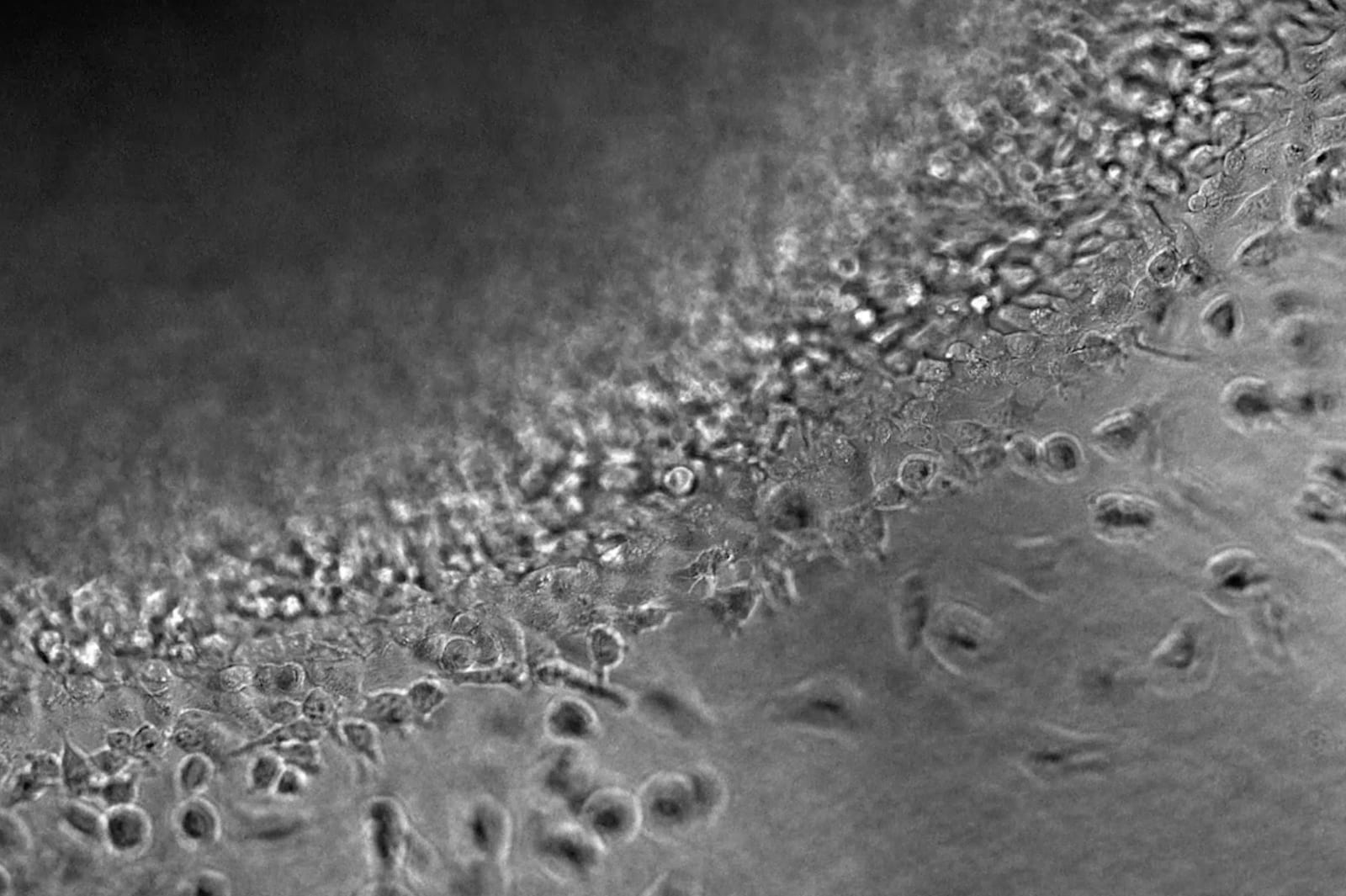
Cells are cultured on rigid plastic substrates and exposed to drugs in environments that are mechanically inert. There is no fluid flow, no cyclic stretching, no compression: none of the dynamic forces cells experience in living tissues. For decades these static assays have served as the backbone of biological research, but that simplicity comes at the cost of physiological reality.
Cells are mechanical systems
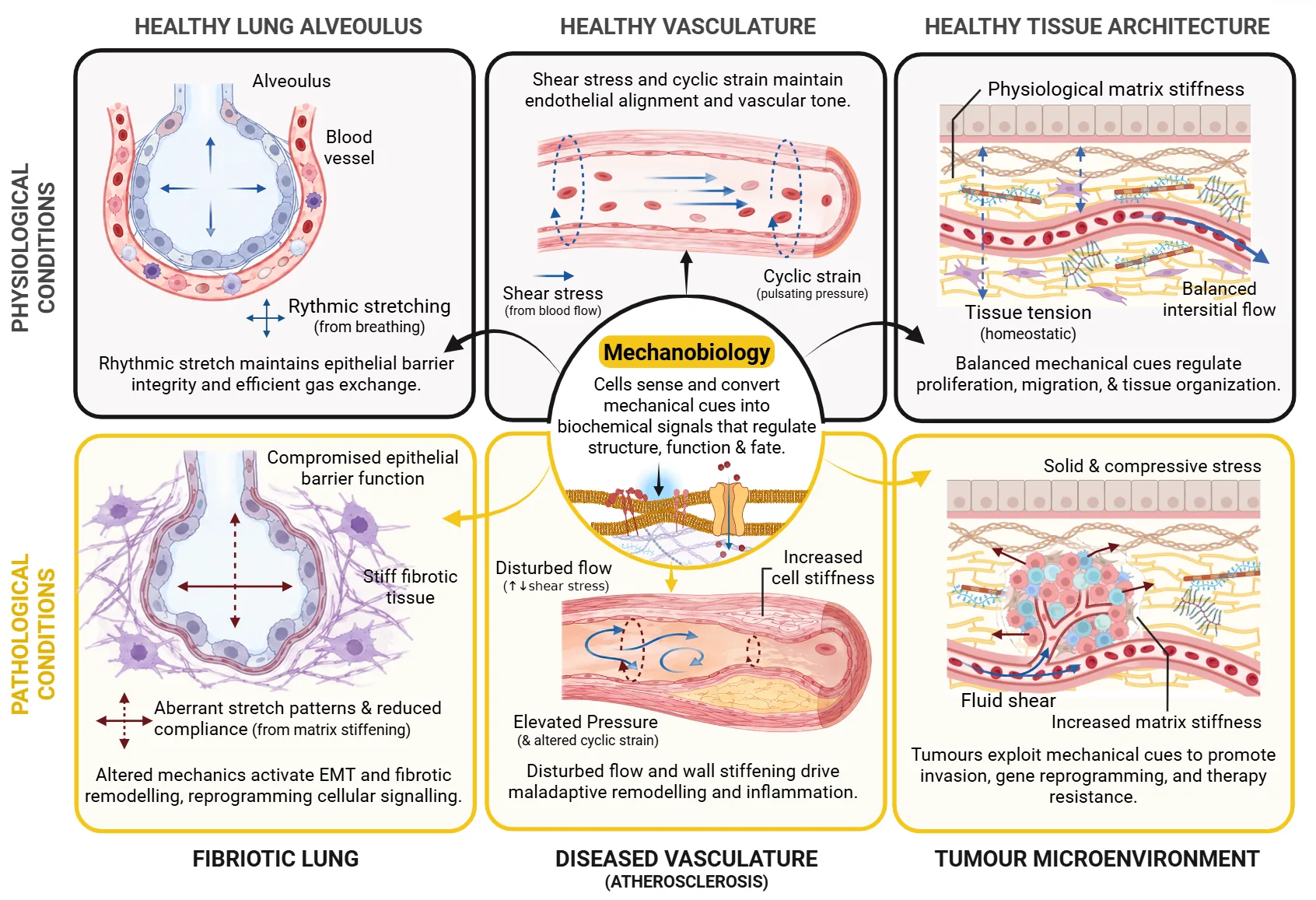
Cells are not passive building blocks; they are dynamic entities constantly responding to mechanical cues. Through mechanotransduction, they sense stiffness from the extracellular matrix, fluid shear from blood flow and tension from tissue stretching: cues that reshape cytoskeletal organization, alter gene expression and dictate cell fate.
These inputs are integral to tissue homeostasis and disease. Rhythmic stretching in the lungs preserves epithelial barrier function; in fibrosis, altered mechanics trigger pathological remodelling. Shear stress maintains healthy vasculature, while disrupted flow and vessel stiffening drive disease. In tumours, malignant cells exploit matrix stiffness, compression and shear to promote invasion and therapy resistance.
From simplification to misprediction
When cells are removed from their mechanical context, their phenotype no longer reflects their in vivo counterpart. A compound may look effective in a simplified assay yet perform poorly against the complexity of human tissue. Mechanical context is a hidden variable shaping predictability, efficacy and toxicity, and part of the well-known problem of limited translational predictivity.
When models leave out the relevant physical environment, they can create early confidence that later turns into costly failure.
Reintroducing mechanical reality
The field is shifting toward mechanosensitive biology, placing biomechanics at the core of experimental design. Microfluidic devices, mechanical stretchers and organ-on-chip platforms recreate the cellular microenvironment through controlled flow, cyclic stretch and tunable stiffness.
At 60Nd we developed NeoMag®, a programmable mechanical actuation platform that recreates user-defined physiological and pathological conditions in vitro. It offers precise, contact-free control of key physical parameters, programmed remotely and integrated into standard lab workflows: portable, compatible with P35 dishes and standard culture plates, and adaptable to common imaging systems and incubators. Researchers can tune substrate stiffness from soft brain to rigid fibrotic tissue and apply sustained or cyclic stretch, compression and shear.

Looking ahead
The goal is not to replace existing methods but to complement them. Static assays still have a role in early-stage research; as candidates progress, integrating mechanical context may become essential to reducing attrition and improving success rates. At 60Nd, we're working toward a future where the physical and biochemical dimensions of life are studied together, not in isolation.
Reference list
- 1. Humphrey JD, Dufresne ER, Schwartz MA. Mechanotransduction and extracellular matrix homeostasis. Nature Reviews Molecular Cell Biology. 2014 Oct 22;15(12):802–12. doi:10.1038/nrm3896
- 2. Link PA, Tschumperlin DJ. Mechanobiology and Resolution of Lung Fibrosis. Annual Review of Physiology. 2026 Feb 10;88(1):487–511. doi:10.1146/annurev-physiol-031725-021041
- 3. Humphrey JD, Schwartz MA. Vascular Mechanobiology: Homeostasis, adaptation, and disease. Annual Review of Biomedical Engineering. 2021 Jul 13;23(1):1–27. doi:10.1146/annurev-bioeng-092419-060810
- 4. Agrawal A, Javanmardi Y, Watson SA, Serwinski B, Djordjevic B, Li W, et al. Mechanical signatures in cancer metastasis. npj Biological Physics and Mechanics. 2025 Feb 4;2(1). doi:10.1038/s44341-024-00007-x
- 5. Loewa A, Feng JJ, Hedtrich S. Author correction: Human disease models in drug development. Nature Reviews Bioengineering. 2023 Jun 13;1(8):606–606. doi:10.1038/s44222-023-00088-8
- 6. Gomez-Cruz C, Fernandez-de la Torre M, Lachowski D, Prados-de-Haro M, del Río Hernández AE, Perea G, et al. Mechanical and functional responses in astrocytes under alternating deformation modes using magneto-active substrates. Advanced Materials. 2024 Apr 21;36(26). doi:10.1002/adma.202312497